Wellness · Women's Body
The Swelling Isn't About Salt. Most Women Find This Out Too Late.
And the longer you wait, the harder it gets. Here's why.
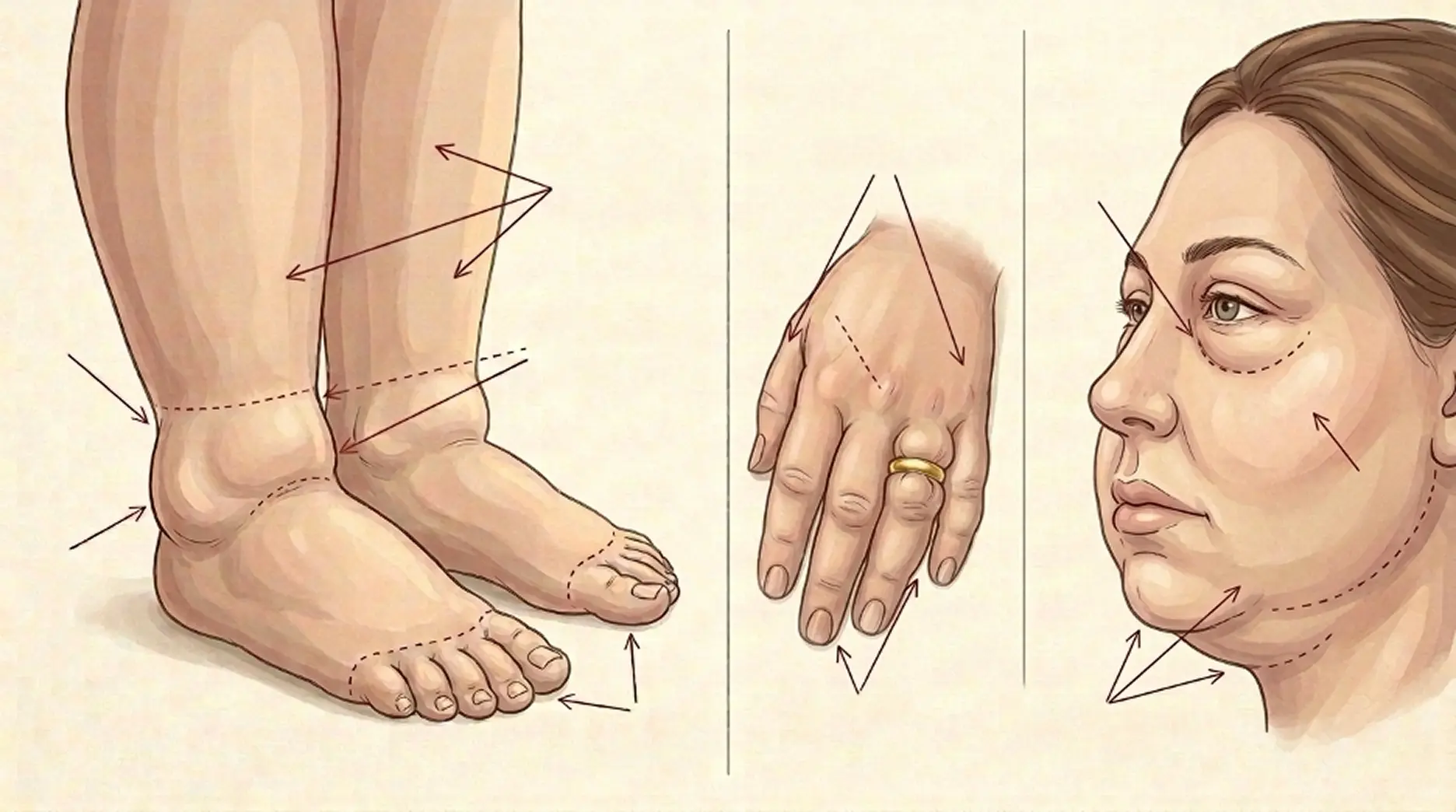
Many people think that if you're swollen, you're eating too much salt. Cut the sodium, drink more water, and the puffiness will sort itself out.
That advice is not wrong, exactly. But for a large number of women over forty, it is incomplete in a way that costs years.
Because the swelling comes back. Every time. No matter how carefully they track the sodium, no matter how clean the diet gets. The puffy face in the morning. The ankles that thicken through the day. The fingers that don't quite fit the rings by evening.
And it is not just physical. Women dealing with persistent, unresolved swelling often describe something else alongside it: a heaviness that is not only in their body. Low energy that sleep does not fix. A flatness, a dullness, some days something that feels closer to depression. They stop recognizing themselves in photos. They start avoiding mirrors in the morning. Small things that used to feel manageable start to feel like too much.
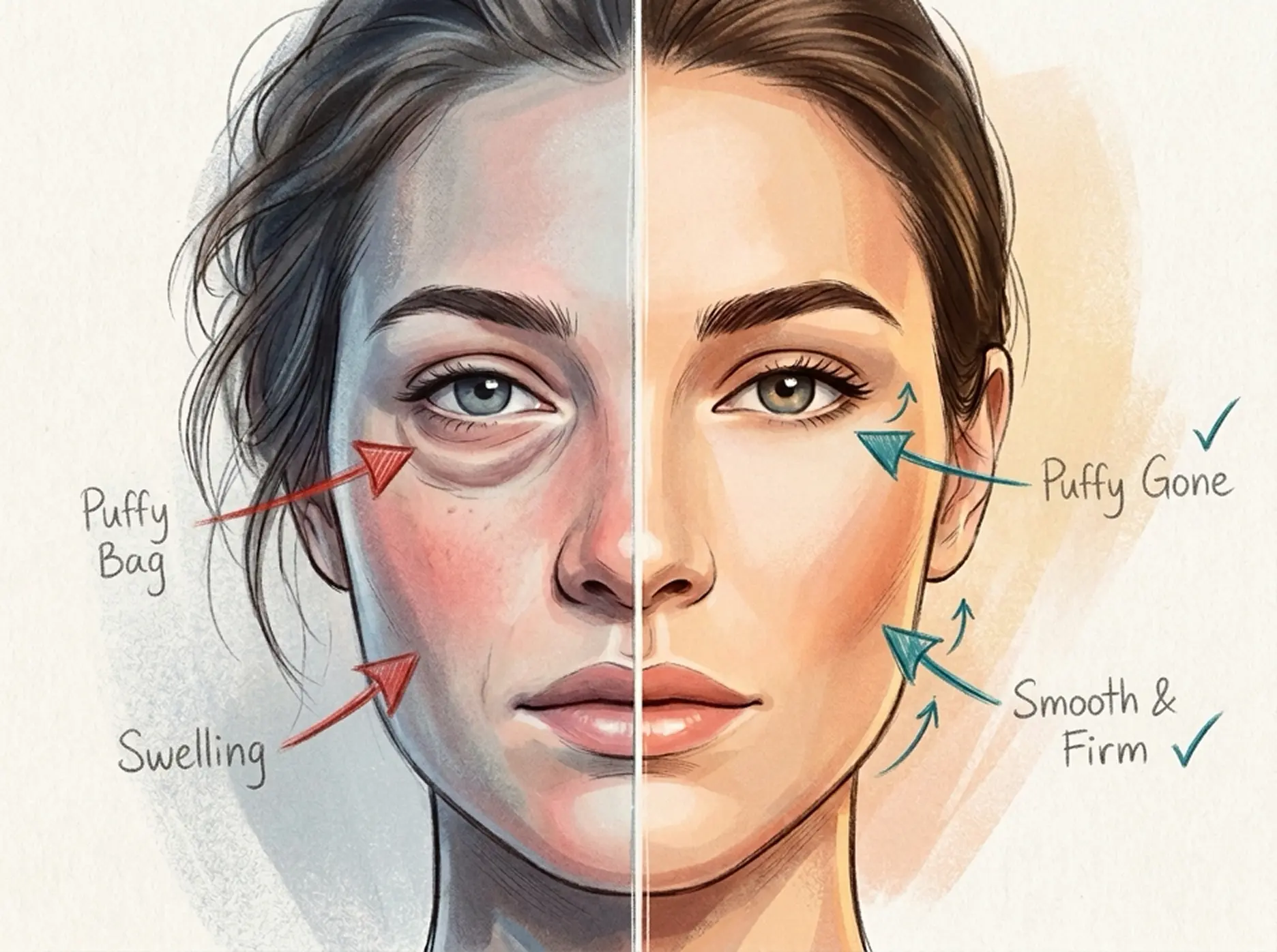
That connection is not imaginary, and it is not just about self-image. The lymphatic system drains the brain too. A network called the glymphatic system clears metabolic waste from brain tissue overnight. When lymphatic flow is congested systemically, that process slows. Brain fog, low mood, a general sense of being waterlogged in every sense of the word. These are not separate problems. They are the same system.
And Without Addressing It, It Tends to Get Worse, Not Better
And here is what nobody mentions: the longer that goes on, the harder it becomes to fix.
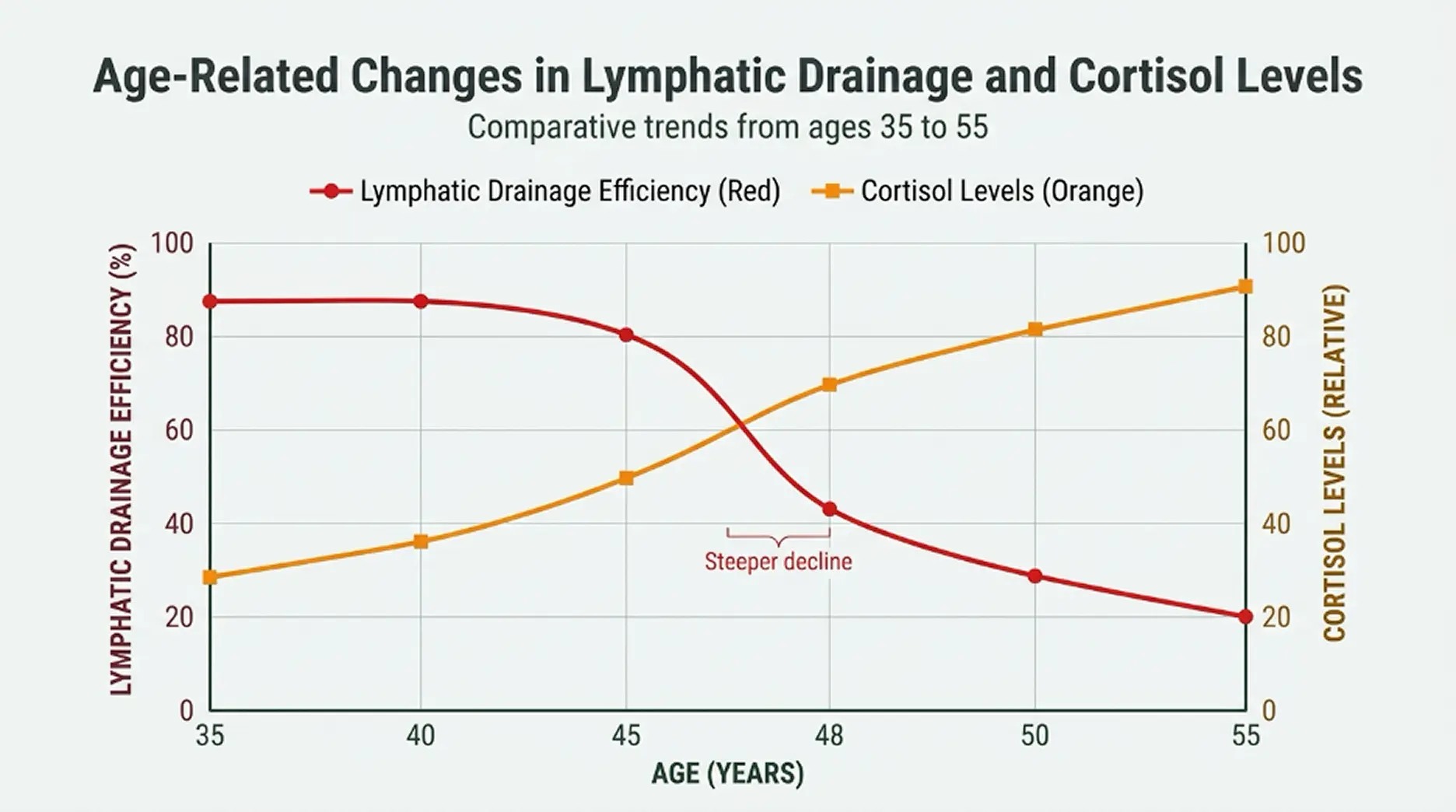
The system responsible for draining excess fluid from your tissues, the lymphatic system, loses elasticity and efficiency over time. A congestion pattern that takes three weeks to resolve at forty-four can take four months to move at fifty-two. Not because the solution changes, but because the system has spent years running slow, and the vessels have adapted to it.
This is what "finding out too late" actually means. Not that the problem becomes unfixable. It does not. But every year the window for an easy reset gets a little narrower.
If the swelling has been building for a while, this article is worth reading to the end. The sequence below explains why earlier is easier than later.
Salt Is Real. But It's Not the Whole Story.
Let's be precise about what sodium actually does. When you consume more sodium than your kidneys can process, your body holds onto water to dilute it. This creates temporary fluid retention: real, measurable, and yes, it can show up as puffiness.
For some people, reducing sodium makes an immediate and lasting difference. If cutting salt solves the problem and keeps it solved, then salt was your issue.
But here is the problem with the standard advice: it treats every case of swelling as sodium-driven. And for a significant portion of women, particularly those over forty, the swelling persists regardless of sodium intake because it has a completely different cause.
"The women who cut salt and stay swollen aren't failing at their diet. Their swelling has a different root. And no amount of sodium restriction addresses it."
Dr. Patricia Engel
Here is what the standard swelling checklist looks like, and why each item is a partial answer at best:
- Too much saltContributes, but cutting it rarely resolves persistent swelling in women over 40.
- Not drinking enough waterDehydration causes its own problems; it is rarely the driver of chronic puffiness.
- Standing or sitting too longGravity-driven pooling. Real, but it clears quickly in younger women and lingers in older ones.
- One glass of wineAlcohol inflames and dehydrates. It contributes, but it is not the primary cause of daily swelling.
- Not enough sleepSleep affects many things; not the primary driver of morning facial puffiness.
All of these are legitimate contributors at the margins. None of them explain why a woman who is doing everything right still wakes up looking like she didn't.
What's Actually Happening
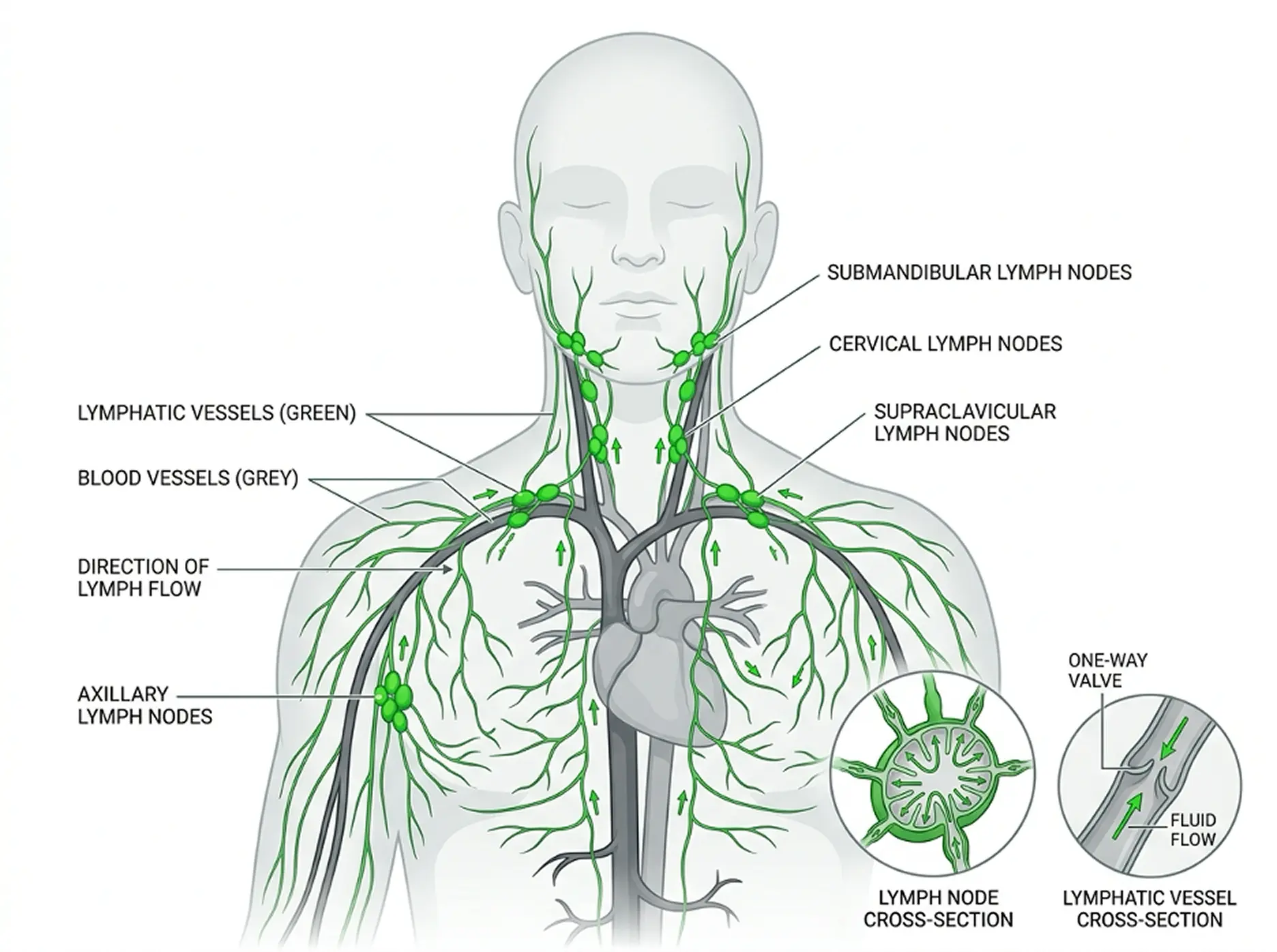
Your body has two circulatory systems running in parallel.
The first is the one you know about: the cardiovascular system, blood pumped by the heart through arteries and veins.
The second is the lymphatic system. It runs alongside your blood vessels, collecting excess fluid from your tissues and returning it to the bloodstream after filtering it through lymph nodes. It handles the fluid that leaks out of capillaries, waste products from cellular activity, and immune material that needs processing.
The difference between the two systems: your cardiovascular system has a pump. Your lymphatic system does not.
Lymph moves through your body via muscle contractions, breathing, and body position. When you move, lymph moves. When you're still (asleep, sitting, sedentary), it slows or stops.
In your twenties and thirties, this is not a problem. You wake up, move around, and your lymphatic system clears the overnight accumulation quickly. The puffiness is gone in minutes.
After forty, the system slows. The vessels become less elastic. Estrogen, which helps maintain lymphatic vessel tone, begins to decline with perimenopause. The lymph nodes process fluid more slowly. And the result is fluid that pooled in your face overnight and simply does not clear.
- Lymphatic vessel elasticity declines, so vessels push fluid less effectively.
- Estrogen decline (perimenopause, menopause) reduces vessel tone, a direct effect on drainage efficiency.
- Lymph node processing slows, so accumulated fluid takes longer to filter and return to circulation.
- Collagen loss in skin reduces "bounce-back", so fluid pooling becomes more visible at the surface.
- Morning puffiness that cleared in 10 minutes at 35 now takes 2 hours, or does not fully clear at all.
This is why the standard advice does not hold. You can cut sodium to zero. You can sleep nine hours. You can drink three liters of water a day. None of it directly addresses a lymphatic system that is no longer draining efficiently.
The fluid isn't there because of salt. It's there because your drainage system isn't moving it out.
Why It Gets Worse, Not Better, With Age
The progression is consistent enough that many women can date it precisely: "It started around 43." "Around the time my periods became irregular." "Gradually after 45."
That timing is not coincidental. The lymphatic decline that drives persistent swelling in women tracks closely with the hormonal changes of perimenopause. Not because of any single dramatic shift, but because of the slow compound effect of several systems losing efficiency at once.
- Lymphatic flow slows.
- Estrogen drops, reducing vessel tone further.
- Collagen loss makes swelling more visible at the skin surface.
- Metabolism slows, reducing the incidental movement that drives lymph flow.
- Cortisol, elevated in chronically stressed women, causes additional fluid retention and impairs lymphatic drainage.
Each of these is modest on its own. Together, they explain why a woman who "never had this problem" at 38 is dealing with persistent daily puffiness at 46. And why it does not respond to the same fixes that worked when she was younger.
What Actually Moves the Lymph
The lymphatic system can be directly supported. These are the methods with the most consistent evidence.
Movement, especially low-impact, rhythmic exercise
Walking, rebounding (mini-trampoline), swimming, yoga. The muscle contractions involved in these activities are the most powerful driver of lymphatic flow. Twenty minutes of walking in the morning is meaningfully different from not walking.
Manual lymphatic drainage
A specific massage technique that follows the anatomical path of the lymphatic vessels, moving fluid toward lymph nodes. Performed correctly by a trained therapist, or using self-massage techniques along the jaw, neck, and collarbone, it can produce visible results within 24 hours. It requires consistency to maintain.
Hydration
Counterintuitively, drinking enough water helps the lymphatic system flow more efficiently. Dehydration thickens lymph fluid, making it harder to move through the vessels.
Botanical compounds that directly support lymphatic drainage
This is the category most women haven't heard of, because it sits at the intersection of herbal medicine and anatomy, not mainstream health advice. Certain herbs have documented effects on lymphatic tissue and drainage that have been used in Western botanical medicine for over a century.
The Botanical Approach: Four Ingredients Worth Understanding
Not all supplements marketed for "bloating" or "water retention" target the lymphatic system. Most work on the kidney end: increasing urinary output, which temporarily reduces fluid volume but does not address the underlying drainage problem. The fluid comes back because the lymph is still congested.
Four herbs have a specific, documented relationship with lymphatic function.

Cleavers (Galium aparine)
The most classically lymphatic herb in European botanical medicine. Used specifically, not as a general wellness herb but as a targeted lymphatic agent, for congested drainage, swollen lymph nodes, and sluggish lymph flow. It is the first choice of any trained medical herbalist presented with a lymphatic complaint. The mechanism: compounds in cleavers appear to stimulate lymphatic vessel activity and support lymph node function.
Dandelion Root
The liver receives and processes the fluid the lymphatic system collects. When liver function is suboptimal, lymphatic drainage backs up, like a drain that empties into a slow sink. Dandelion root supports hepatic function, improving the downstream processing of lymphatic fluid. Supporting both the lymphatic system and the liver simultaneously produces better results than either alone.
Burdock Root
Used in traditional medicine to "move stagnation", the herbalist's term for accumulated, slow-moving fluid in the tissues. Burdock root appears in historical lymphatic formulas specifically for this property. It is a consistent component of classical lymphatic combinations in European and Ayurvedic botanical medicine.
Red Clover
Supports capillary tone and tissue fluid balance from the vascular side. It addresses the "leakage" end of the equation, the tendency of capillary walls to allow excess fluid into the tissue, complementing the drainage herbs that work on moving it out.
What makes this combination effective is that it addresses the problem at multiple points in the pathway: drainage (cleavers, burdock), liver processing (dandelion), and vascular permeability (red clover). Addressing only one point leaves the others as bottlenecks.
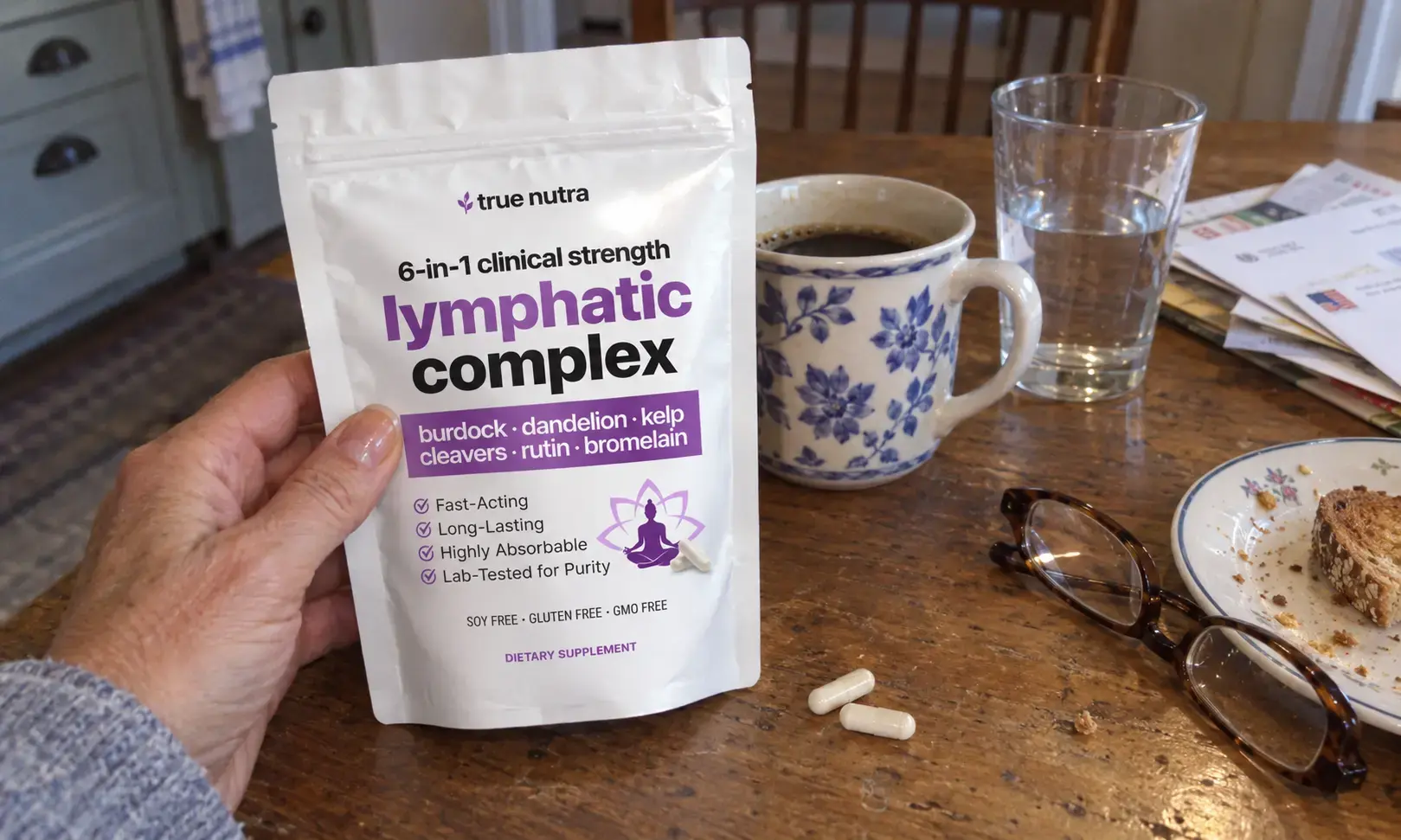
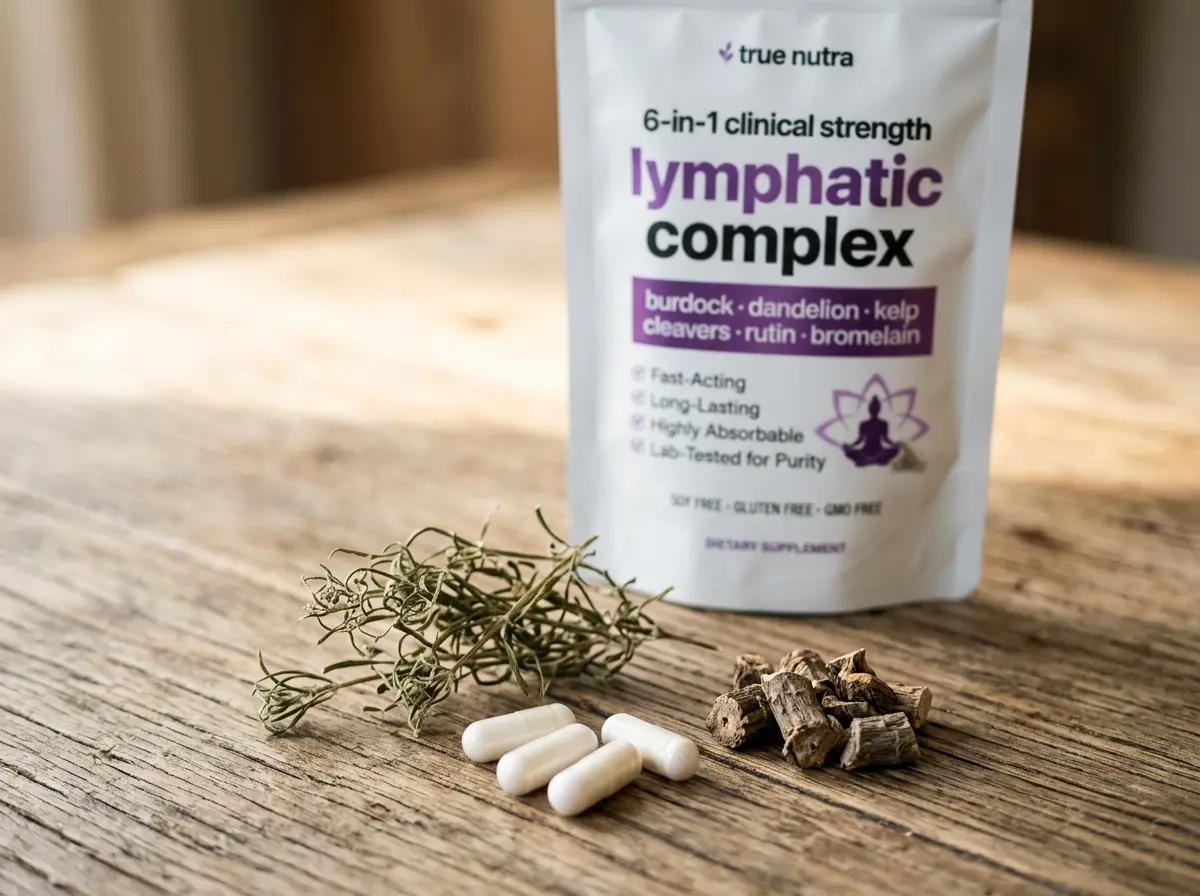
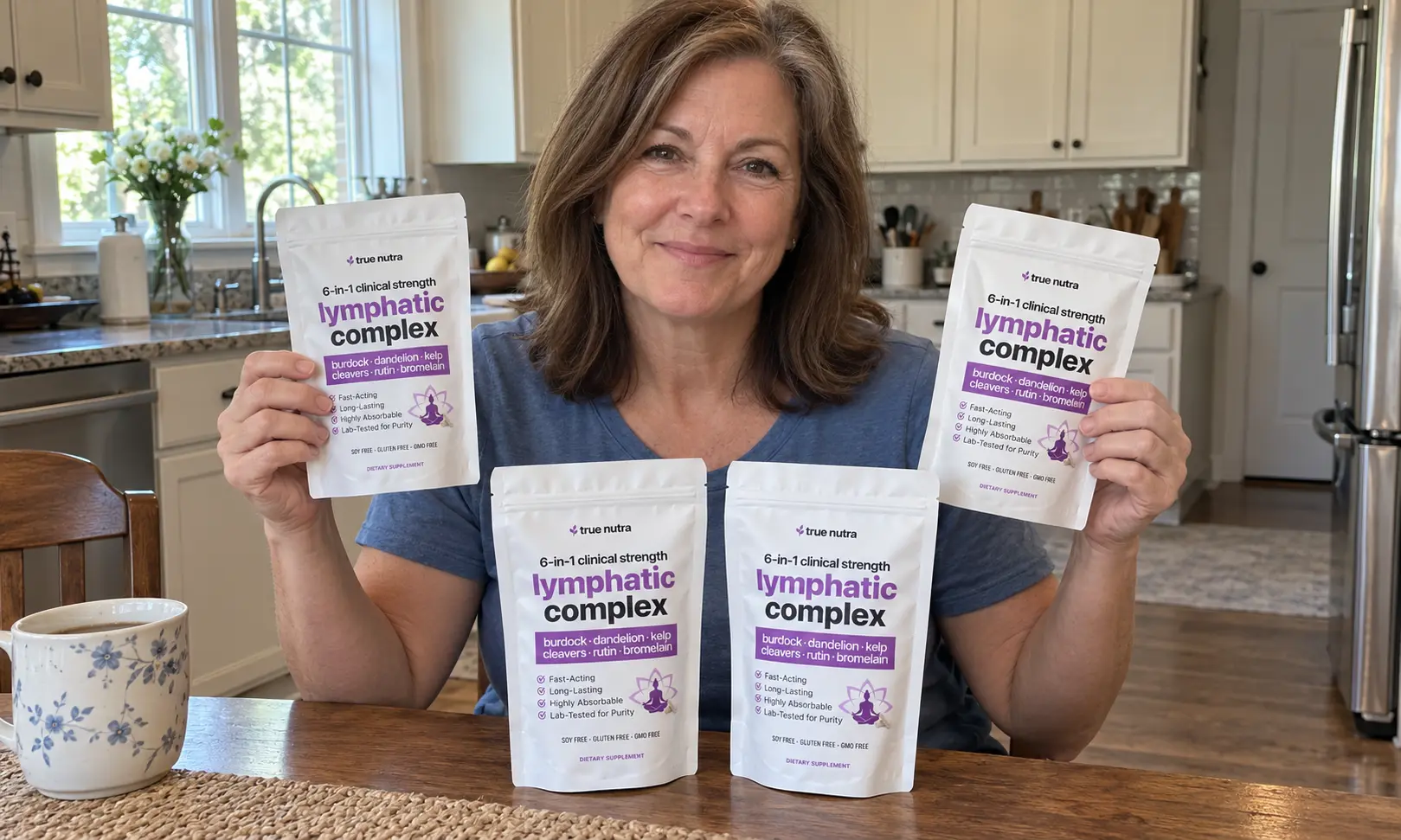
TrueNutra Lymphatic Complex uses all four of these ingredients together, in a formula built specifically around this mechanism. It is the formulation I have seen come up most consistently when women in health communities discuss what actually worked for persistent swelling. Not as a diuretic that masks the symptom, but as direct lymphatic support.
What Changes With Lymphatic Support
| What you notice | Without lymphatic support | With TrueNutra Lymphatic Complex |
|---|---|---|
| Morning face | Puffy for 1-3 hours, sometimes all day | Drains within 30-45 minutes for most users |
| Ankle / leg heaviness | Builds through the day, worse by evening | Noticeably lighter within 2-4 weeks |
| Energy on waking | Groggy, sluggish, "waterlogged" feeling | Clearer from week two onward |
| Salt restriction | Reduces puffiness slightly, always comes back | Puffiness resolves even without dietary changes |
| Timeline | Ongoing, worsens with age | Most women see change by weeks 3-6 |
Based on user reports. Individual results vary.
What to Expect
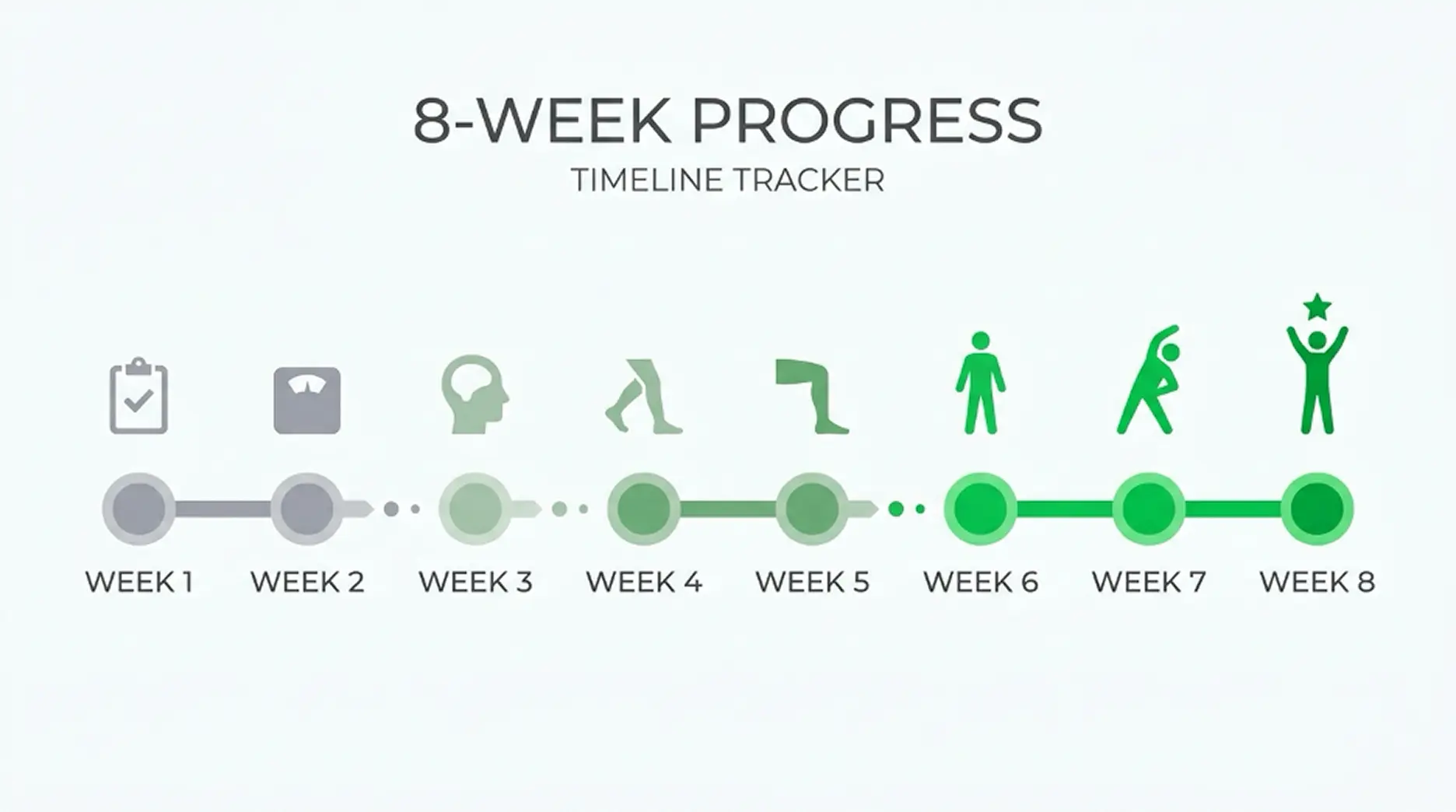
The timeline for lymphatic support is slower than a diuretic, and more durable. Most women report:
- Week 1-2: Subtle. Some notice slightly less puffiness by midmorning. Some notice nothing yet.
- Week 3: The clearest early marker. The face drains faster in the morning. Many women notice this before they notice anything else.
- Week 4-5: Ankle and leg heaviness reduces. More consistent results day to day.
- Week 6-8: The new baseline. Puffiness that used to last until noon is gone before 8 a.m. The difference is visible in photos.
Women who expect overnight results are sometimes disappointed at week two and quit. Women who reach week six consistently describe the change as significant. This is the pattern with lymphatic support: it takes time to move a system that has been slow for years.
Questions readers ask
Is this just a diuretic? No. Diuretics increase urinary output and temporarily reduce fluid volume. This formula targets lymphatic drainage, so the fluid does not simply return the next day.
Do I have to change my diet? The women in the reports above saw puffiness resolve without dietary changes. Cutting sodium still helps at the margins, but it is not the mechanism here.
How long should I stay on it? The six-to-eight-week window is where most women describe the change as consistent. At two capsules a day, the four-pack option covers 60 days, which is the full window with a margin.
From Women Who Stopped Blaming Salt
"I spent two years blaming salt and wearing these white shorts because they were the only thing left that fit comfortably. By lunch my rings wouldn't go on and my ankles had disappeared into my shoes, then by morning it was all back to normal, so I decided this was just what my body did now. Six weeks in I pulled the same shorts on and they hung off me, and not only at the waist. I didn't start a diet and I didn't start running. The puffiness went first, and then the rest slowly followed it. I still can't fully explain it."
Renée M., 38, Portland OR

"I had stopped letting anyone take my photo, and that first one is from a work event where I stood at the back of the group. The thing that changed first wasn't the scale, it was the swelling. My face was puffy every morning at seven, and then one week it simply wasn't. Then my jeans went loose, and then the scale finally moved. I'm not going to pretend I lost nothing, but the fluid went before the weight did, and that's the part nobody had ever told me."
Joan L., 33, Nashville TN

Testimonials reflect the experiences of specific individuals and are not a guarantee of results.
Reader Reviews
SharonKW_48Verified
2 weeks ago · United States
Finally an explanation that makes sense
The "two circulatory systems" explanation is the first thing that's actually made sense to me. I always thought swelling was just a sodium/water balance thing. Now I understand why cutting salt didn't fully fix it.
Sharon, this is exactly what we hear from most women before they try the formula. The lymphatic system is almost completely missing from mainstream health education. Once you understand it, a lot of things click into place.
MargaretF_wellnessVerified
1 month ago · United States
Ankles better by week four
I ordered after reading this. I'm at week 4. The ankle situation is genuinely better. My face still takes a bit in the morning but it clears much faster than it used to. I'm staying with it.
LindaT52_skepticVerified
3 weeks ago · United States
Retired nurse, checked the literature myself
I'm a retired nurse and I was dubious about the botanical claims. I looked up cleavers and dandelion root in the herbal literature. The traditional documentation for lymphatic use is real. The formulation is internally consistent. I ordered the 4-pack option.
Linda, we genuinely appreciate when people with a clinical background look into the mechanism rather than dismiss it outright. The traditional use is well documented, and the modern research on lymphatic vessel biology is catching up. Thank you for taking the time.
TrueNutra Lymphatic Complex: Current Pricing
For women dealing with persistent swelling that hasn't responded to dietary changes, and particularly for women over forty who have noticed this worsening over time, TrueNutra Lymphatic Complex is the formula that addresses the actual mechanism.
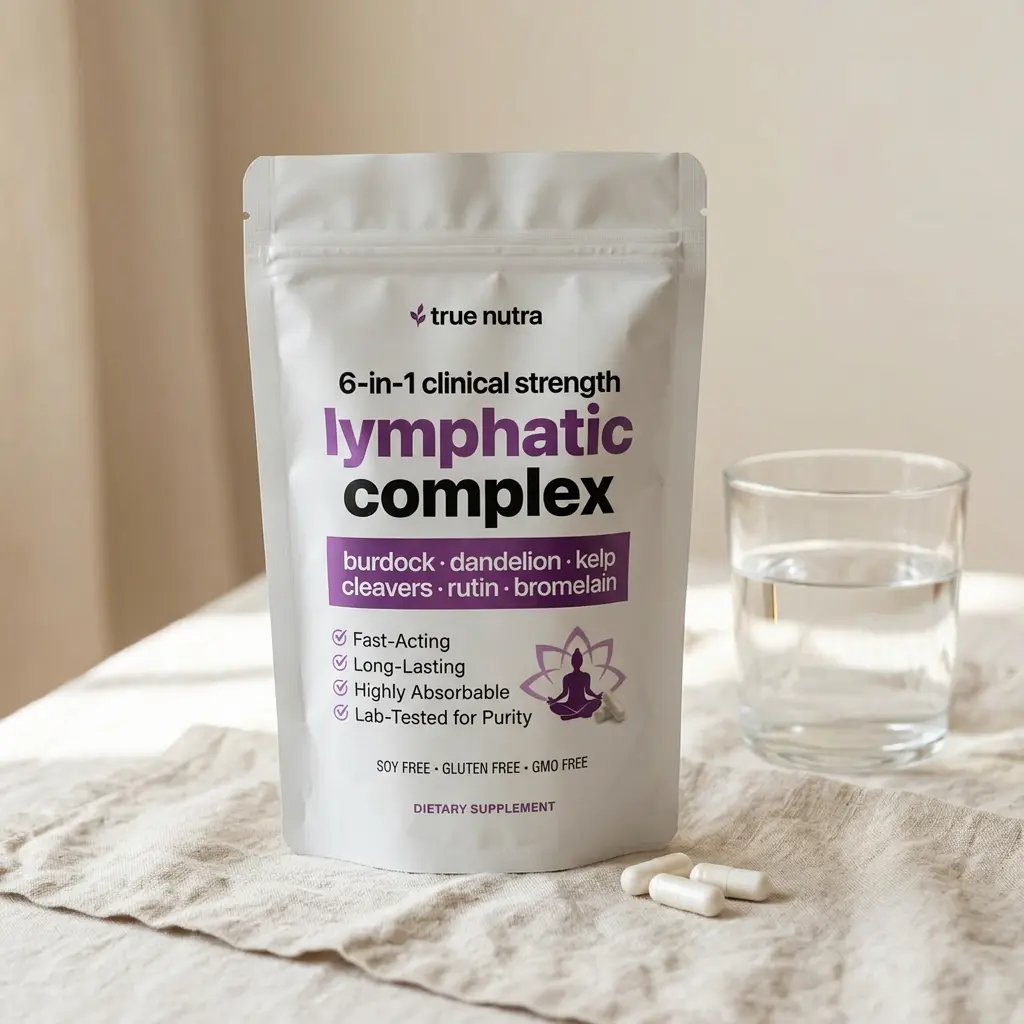
Stock update:14 units remain at current pricing. Orders placed before November 30, 2026 also enter the 6-Week Challenge automatically.
| Package | Price | Daily cost |
|---|---|---|
| 1 pack, 30 capsules, 15-day supply (2 capsules a day) | $28.95 | ~$1.93/day |
| Buy 2 Get 2 FREE: 4 packs, 120 capsules, 60-day supply | $38.95 total $9.74 per pack | ~$0.65/day |
Buy 2 Get 2 Free is the best value: 60 days at two capsules a day covers the full six-to-eight-week window where most women see consistent change. Four packs at the single-pack price would cost $115.80, so the bundle saves you $76.85, and you get it at $0.65 a day instead of $1.93.
The four-pack option gives you 60 days at the standard dose, enough to reach the six-to-eight-week window where most women see consistent change and to establish the new baseline. About 65 cents a day for that outcome, instead of $1.93, is I think a straightforward calculation.
Every order placed through November 30, 2026 enters TrueNutra's 6-Week Lymphatic Challenge automatically. Document your face and ankle swelling over six weeks for a chance to win a lifetime supply. No separate entry required.
The Short Version
Salt causes swelling. So do alcohol, dehydration, and standing all day. These are real contributors, and reducing them helps at the margins.
But for women over forty whose swelling persists regardless of what they eat or drink, the explanation is usually the lymphatic system. A system that is running slower than it used to, for reasons that are physiological and hormonal and have nothing to do with dietary failure.
You were not doing it wrong. You just weren't addressing the right system.
Stop blaming salt. Start supporting the lymph.
TrueNutra Lymphatic Complex is available now. The Buy 2 Get 2 Free offer is active. 14 units remain at current pricing. Every order placed before November 30, 2026 enters the 6-Week Challenge automatically.
P.S. The reason cutting salt doesn't fully work is that it's treating a symptom of one cause while the main cause runs unchecked. Two weeks of consistent lymphatic support tends to make that clearer than any explanation can.
P.P.S. The 6-Week Challenge is simple: take a photo of your face and ankles today. Take another in six weeks. That's the test.